Three days in Lisbon, arranged so you are not always climbing
A Lisbon itinerary built around the city's hills rather than against them — three days, one neighbourhood at a time, with the walking that actually works.
Pasquale 5 min read
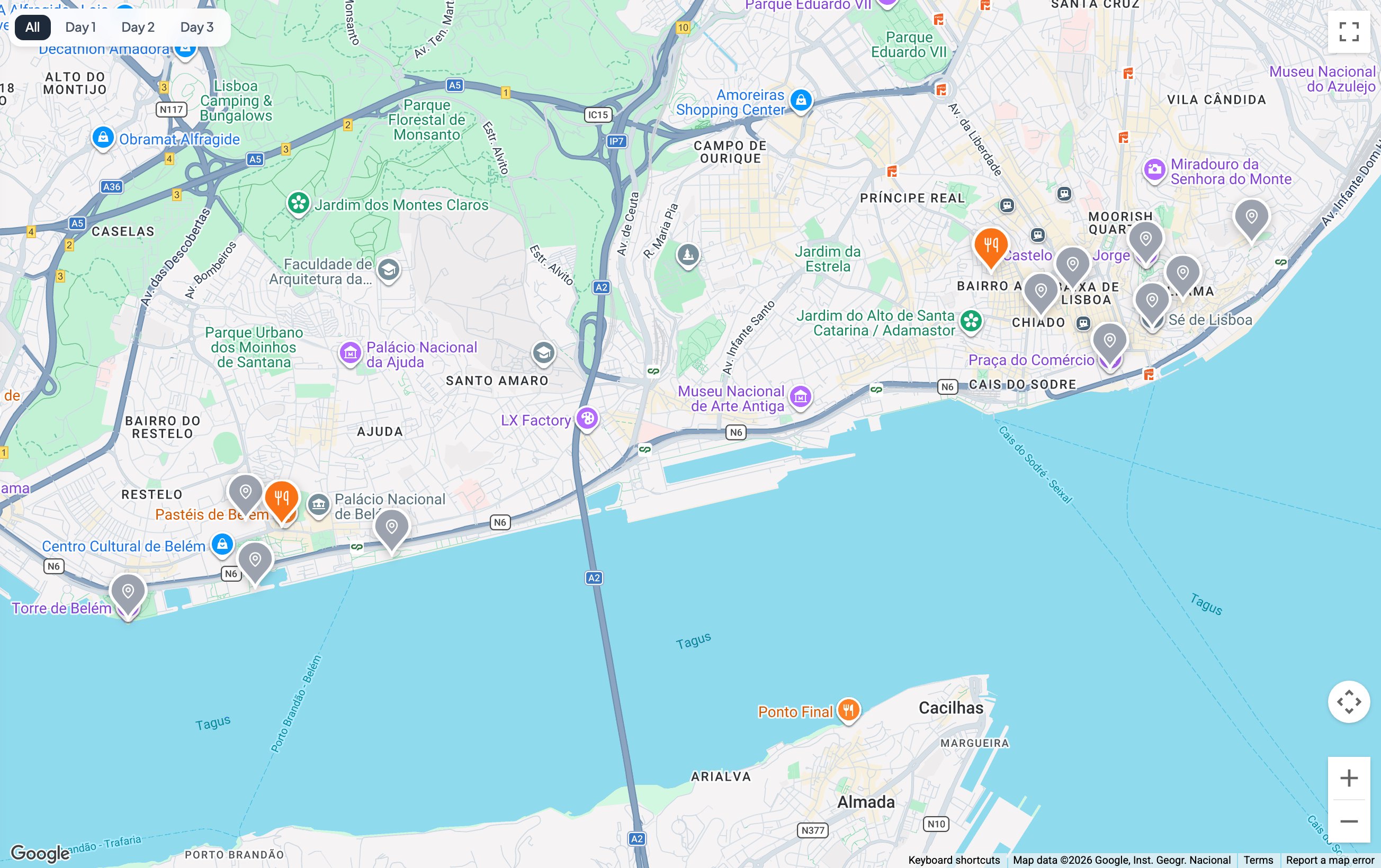
Most Lisbon itineraries are a list of sights in the order someone found them. Then you get there and discover that two of the things scheduled for the same afternoon are separated by a hundred metres of vertical.
Lisbon is built on hills. An itinerary that ignores them is a day of pointless climbing. This one is arranged by neighbourhood and by altitude: each day stays roughly on one level, and you descend rather than ascend wherever there is a choice.
Day 1 — Baixa, Chiado, Bairro Alto
Start low and end high, once.
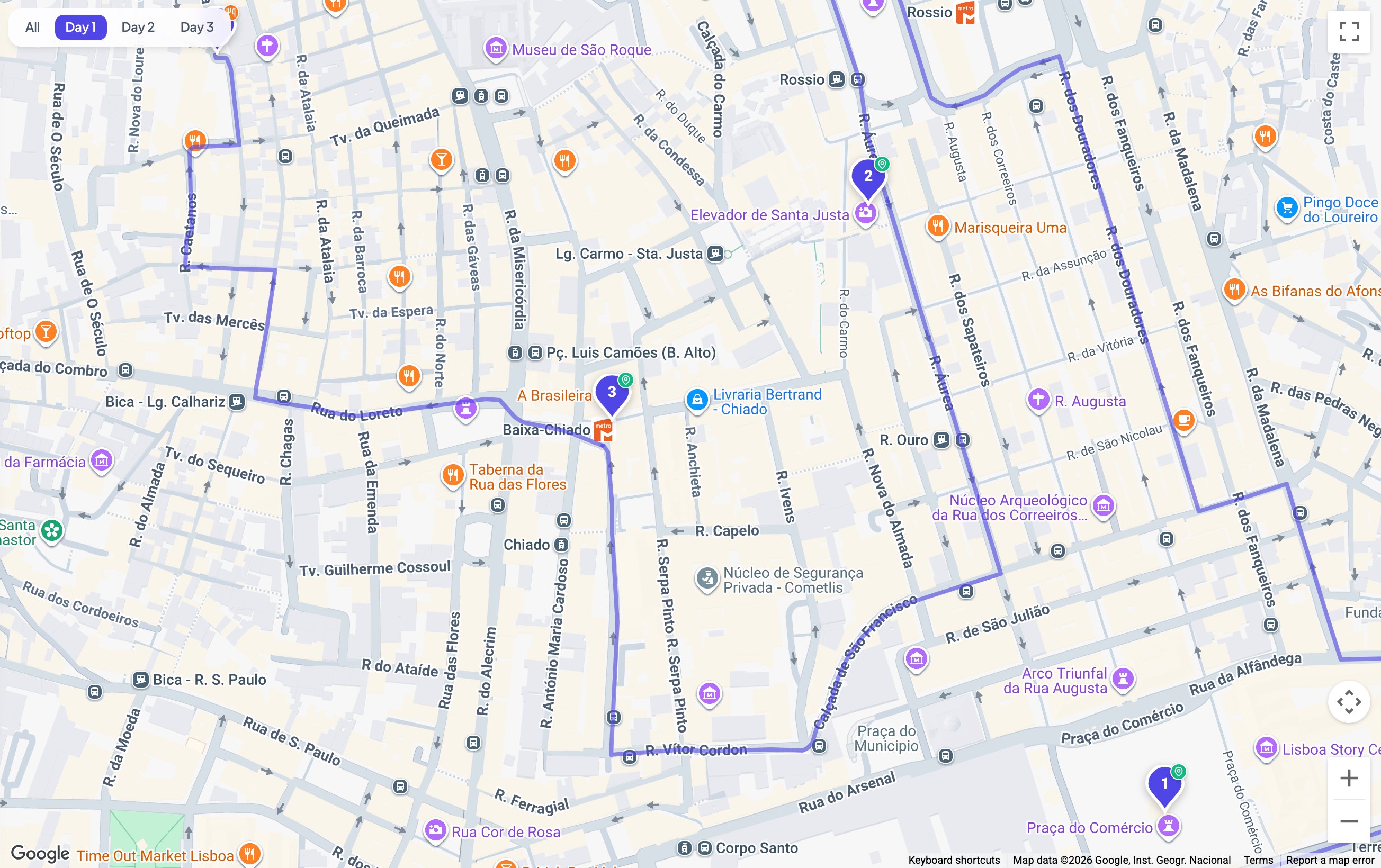
Begin in Praça do Comércio, at the river. It is flat, it is enormous, and it is the only part of central Lisbon laid out on a grid, the result of the 1755 earthquake that flattened everything and gave the Marquês de Pombal a blank sheet.
Walk north through Baixa to Rossio, then take the Elevador de Santa Justa up to Chiado if the queue is short and the stairs beside it if it is not. The lift is a nice piece of iron and a bad use of forty minutes.
Chiado is for the afternoon: bookshops, the Bertrand (the oldest still trading anywhere), coffee standing up at a counter. Walk uphill into Bairro Alto as it gets dark. The neighbourhood is dead until about nine and unrecognisable by eleven.
Evening: dinner in Bairro Alto, then down to Cais do Sodré if you want the night to continue.
Day 2 — Belém, and only Belém
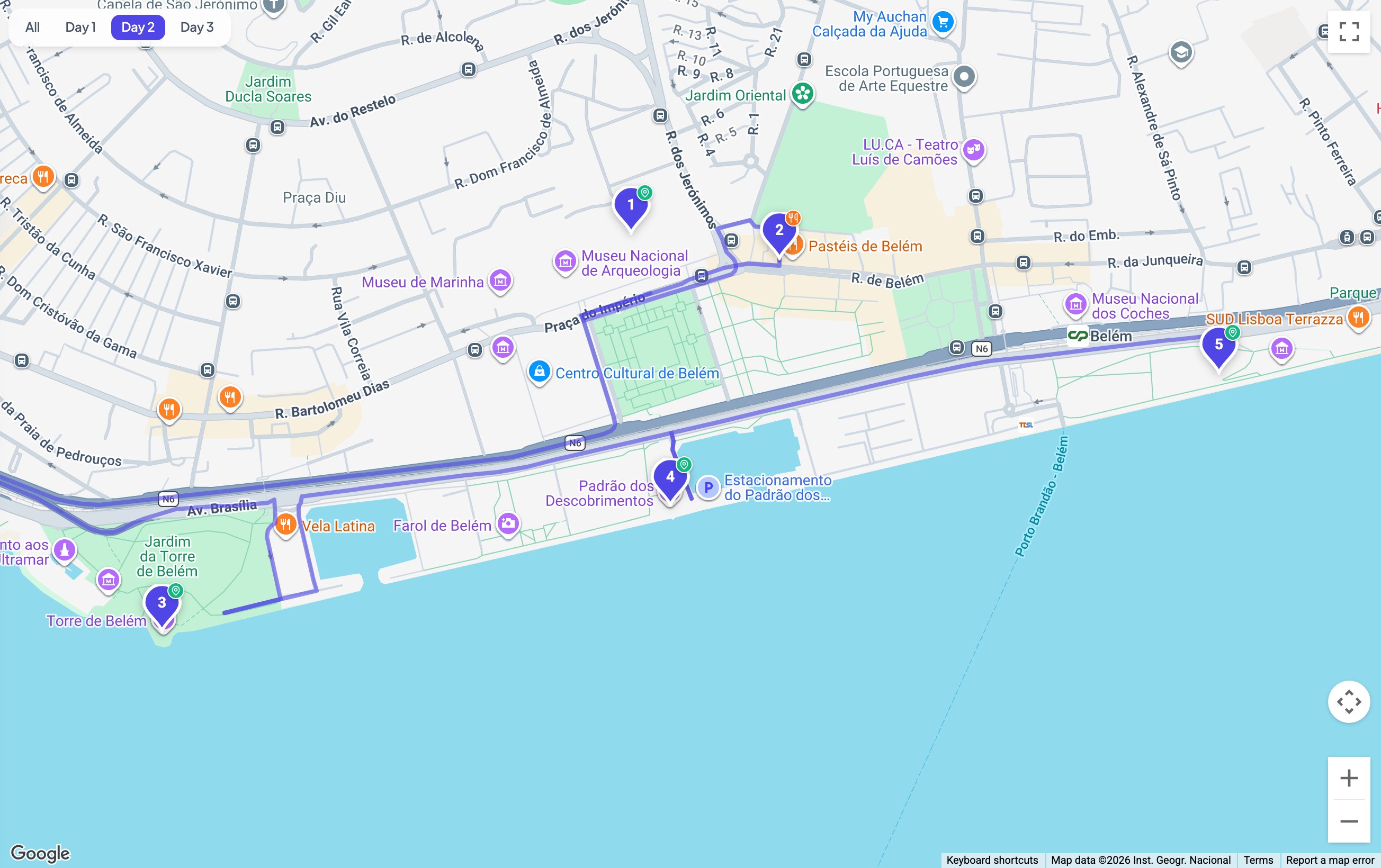
Belém is six kilometres west and people try to fit it into a morning. It does not fit.
Take the tram or the train along the river. The three things worth your time are the Mosteiro dos Jerónimos (go at opening or after three; the middle of the day is a queue), the Torre de Belém from the outside (the interior is a stairwell with a view you can get elsewhere), and the Padrão dos Descobrimentos.
Eat a pastel de nata at Pastéis de Belém because you have to, then eat a better one somewhere else later in the trip. The original is good. The queue is not proportional to how much better it is.
Afternoon: the MAAT if you like modern architecture, the Coach Museum if you want the strangest collection in the city. Head back east along the river as the light goes.
Day 3 — Alfama, downhill
The mistake with Alfama is entering from the bottom. Do the opposite.
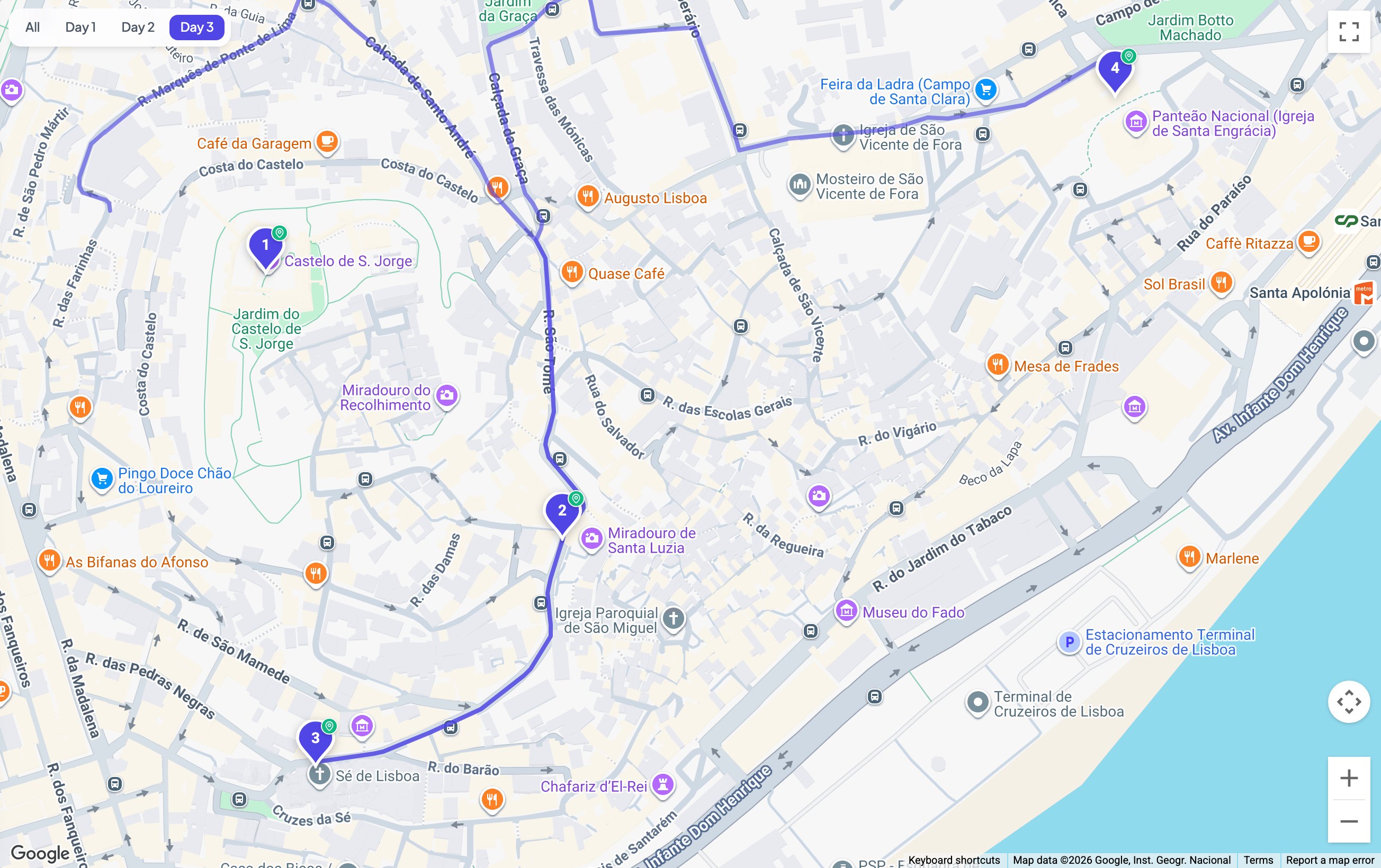
Start at Castelo de São Jorge, at the top. Get there for opening; the castle itself is mostly walls and peacocks, but the view is the point and it belongs to whoever arrives first.
Then walk down through Alfama, with no route. This is the one part of the city the earthquake spared, which is why the streets make no sense: they are medieval, and nobody ever redrew them. Getting lost is the intended experience. You will come out somewhere near the river eventually; the hill only goes one way.
On the way down: Miradouro de Santa Luzia for the tiles, the Sé cathedral if it is open, and any of the small places serving grilled sardines that do not have a menu in four languages.
Late afternoon: the Feira da Ladra flea market if it is Tuesday or Saturday.
What to skip
- Tram 28 as a sightseeing trip. It is a commuter tram full of tourists and pickpockets. Ride one stop if you want the photograph, then walk.
- Fado dinners with a set menu. The food subsidises the music and neither is good. Find a small place in Alfama that starts at ten.
- Sintra squeezed into three days. It deserves its own day and you do not have one.
Copying this into Gullivr
Three days, three neighbourhoods, one each. If you are planning this trip in Gullivr, the shape that works is one day per section above, with the sights added in walking order. The route distances will then tell you where you have been optimistic. Lisbon walking times run longer than the map says, because the map is flat and the city is not.
Or skip the typing. If you have an AI agent connected, ask it to build the trip and describe the shape: three days in Lisbon, one neighbourhood per day, the stops in the order above. It creates the days and adds the places itself, in your account, and what you get is the same trip you would have built by hand. Then you can argue with it. Move Belém to day 3, drop the Coach Museum, ask what else is near the castle. The itinerary is a real thing in a real app the whole time, not a block of text you have to keep re-pasting.
Any agent that speaks MCP works; the agents page has the setup. We wrote about why the app is built this way round separately.